
Central Asia is one of the most fascinating regions I’ve explored in my travels, combining ancient Silk Road cities, spectacular Islamic architecture, rugged mountain landscapes, colorful bazaars, and a remarkable mix of cultures shaped by centuries of trade, conquest, and migration.
For more than 20+ years, Central Asia was high on my travel bucket list. I was particularly interested in Uzbekistan’s legendary Silk Road cities, including Samarkand, Bukhara, and Khiva, with their towering minarets, turquoise-tiled mosques, elaborate madrasas, and centuries-old architecture. But the region offers much more than historic cities.
Beyond Uzbekistan, Tajikistan and Kyrgyzstan are known for their dramatic mountain scenery, remote valleys, traditional villages, and outdoor adventures. Kazakhstan provides another contrast, blending modern cities such as Almaty with expansive natural landscapes and the snowcapped peaks of the Tian Shan mountains.
As a former professional travel photographer and professional watercolor artist, I travel with a slightly different perspective. I’m constantly searching for interesting architecture, unusual compositions, dramatic lighting, colorful street scenes, and landscapes that might eventually inspire my watercolor paintings.
This Central Asia travel hub brings together my firsthand experiences, original photography, practical travel advice, destination guides, and artwork inspired by my journey through Uzbekistan, Tajikistan, Kyrgyzstan, and Kazakhstan.
Whether you’re planning your first trip to Central Asia, researching the best photography locations, exploring the history of the Silk Road, or simply looking for inspiration for your next adventure, you’ll find my travel guides and photographs organized by country below.
Explore Central Asia Travel Destinations
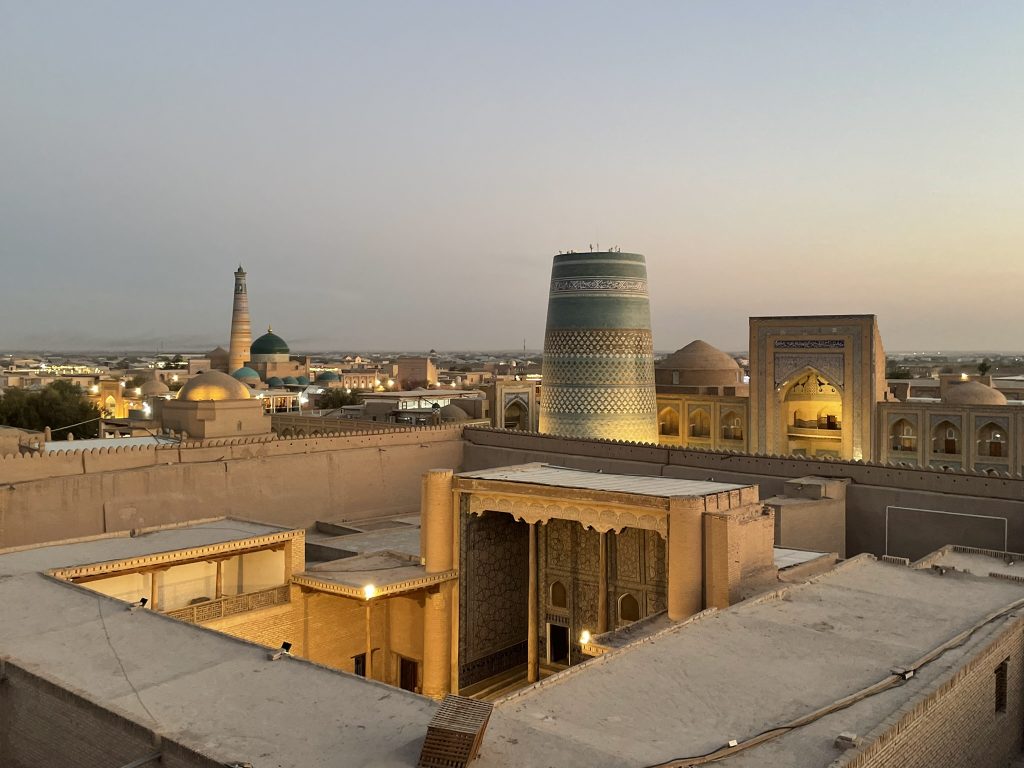
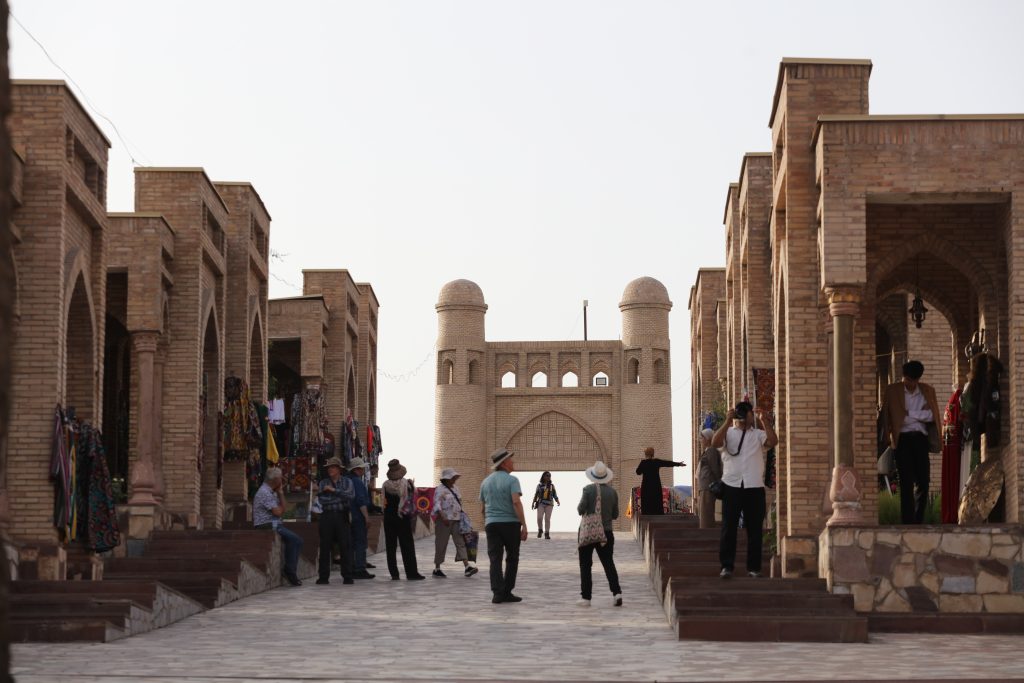
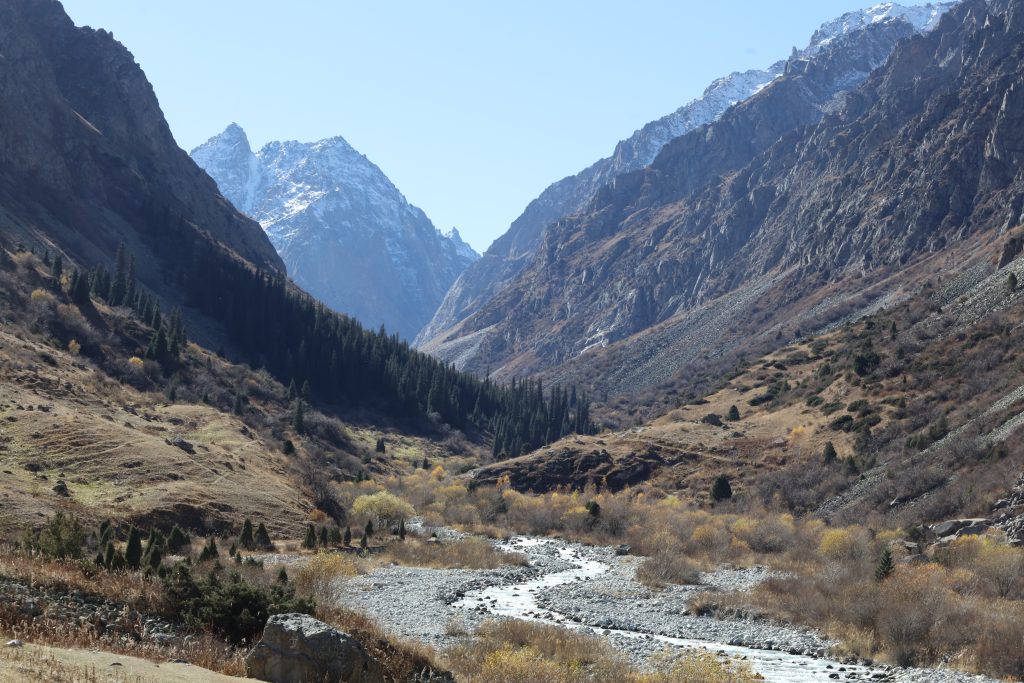
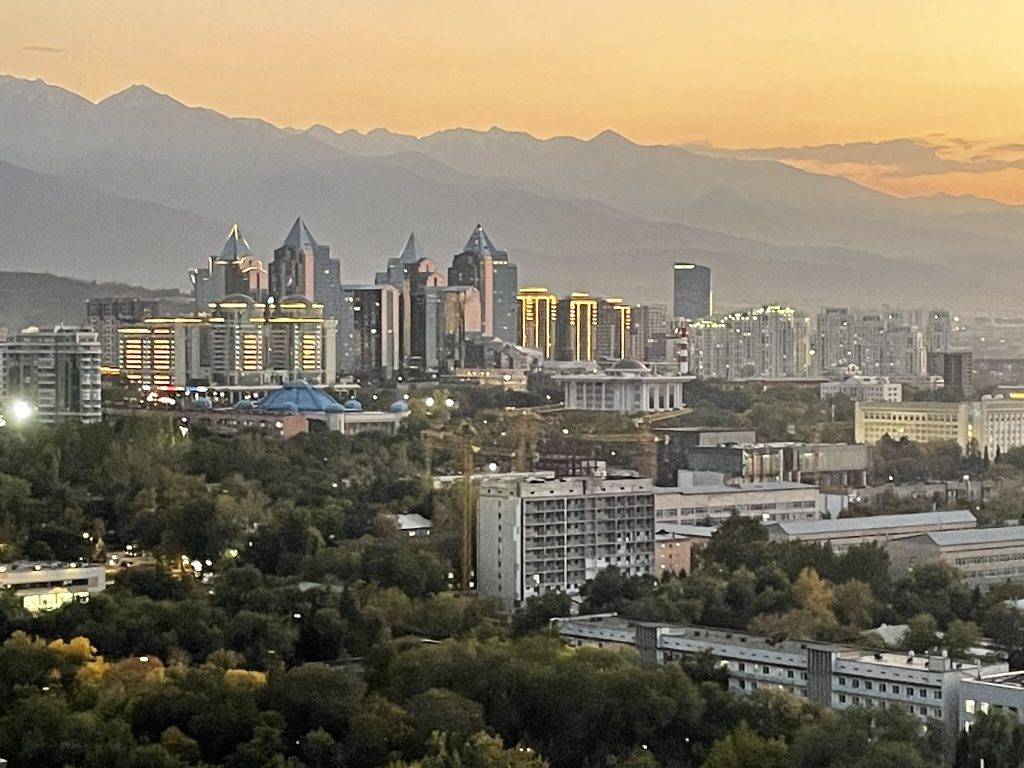
Why Visit Central Asia?
Central Asia is a region of extraordinary contrasts. In a single journey, travelers can explore some of the greatest architectural treasures of the ancient Silk Road, visit modern cities surrounded by mountains, wander through traditional bazaars, and experience landscapes that range from arid deserts to snowcapped peaks.
For centuries, the Silk Road connected China, the Middle East, and Europe through a network of trading routes crossing Central Asia. Merchants, scholars, artists, and conquerors passed through the region, leaving behind an extraordinary architectural and cultural legacy.
Nowhere is this history more visually impressive than in Uzbekistan. The cities of Samarkand, Bukhara, and Khiva contain some of the world’s most remarkable examples of Islamic architecture. Elaborate blue tilework, monumental gateways, intricate geometric patterns, and towering minarets make these cities exceptional destinations for architectural photography.
But Central Asia isn’t just about historic monuments.
Kyrgyzstan and Tajikistan offer an entirely different travel experience, with high mountain passes, remote communities, glacial lakes, and spectacular natural scenery. Kazakhstan adds vast open landscapes, striking modern architecture, and mountain scenery just beyond the streets of Almaty.
Notes About Central Asia
A Few Things I Learned
There are KFCs everywhere. I joked with several English-speaking drivers that even Americans don’t eat that junk. They thought it was funny. I hope.
Central Asia is amazing, but it is not yet a tourist heaven. Tourism is still developing, especially in Tajikistan and Kyrgyzstan. Expedia didn’t work particularly well for me—even though I booked all my hotels through Expedia. Twice, hotels claimed to have plumbing problems and moved me to another property. I’m pretty sure they simply didn’t have my reservation or had double-booked. I was told Booking.com works better in the region, so I’d keep that in mind. One hotel never found my reservation, so after wasting an hour on the phone with the Expedia rep I just booked a room and proceeded with my day.
Everyone asks where you’re from. Then they always ask which state. Everybody does it.
Forget about early hotel check-in. Hotels will happily hold your luggage, but don’t expect to get into your room early. I didn’t bother asking about paying for early check-in.
There aren’t many tourist shops in Dushanbe, Bishkek, or Almaty, particularly Dushanbe. English menus can also be surprisingly scarce. I didn’t see a souvenir shop in Dushanbe and bought my magnets in Hisor. For tourist junk, head to the big markets such as Green Bazaar or Osh Bazaar.
Airports are different, too. You may go through an initial X-ray before entering a large waiting area. Airline desks open only a few hours before departure, and you don’t get your boarding pass or pass through the main security checkpoint until then.
I was particularly excited to finally become a responsible adult with airport lounge access thanks to my new travel credit cards. I planned to arrive ridiculously early, clear security, find a lounge and relax.
Didn’t happen.